Either now or never. Interview with Volodymyr Semkiv, whose works impressed the whole city
Before meeting the sculptor, I wrote the text for the exhibition "From the Roots" at Ya Gallery Kyiv. Curator Pavlo Gudimov offered to come to the assembly of the exposition, where we had a live chat with the author during a walk for construction carabiners for hanging the sculpture "Keys to Paradise". They talked about the architecture of Podil and Lviv. During the lunch break near the restaurant, they talked about higher education and life moments with Greek pitas. During these conversations there was a contact that helped me record this interview as honestly and openly as possible
The first part of the interview was recorded on March 20, when Volodymyr got in touch from the workshop during a break between working on new sculptures. And the second - the next day in the evening, when the artist spent time with his family and had a free hour.
The interviewer is Maria Kharenko
Is it convenient for you to have a conversation while working now?
How often are you in the studio ?
- I try every day, but it turns out differently. I have been working for 4 hours for the last few months. There used to be a nanny, then there were 5. Now she is gone - my wife and children, and then me. But in fact, there are advantages in this - I am very focused, without unnecessary distractions. You understand that time is short. All. Either now or never. Either you do or you don't. There is no time to drink coffee, to relax.
Do you have a certain ritual before starting work?
- I try not to look at the phone, now it doesn't always come out because the war [news], it scatters. You have to concentrate. When you are on your way to work, you try to think about the task already. I think all the time, actually. But that's a good thing: the time for implementation is short, and for thinking more. Even when I am doing something else, I often think about what and how to do it.
And how exactly do you tune in?
- First of all, you have to be hungry, and you don't want to do that. Secondly, while I'm going - I'm adjusting. It is best when you clearly know what you will do today.
There are also a lot of all kinds of organizational issues: call back, drive over, pick up some materials, make arrangements with people, accept orders. It takes a lot of resources and time, which I don't have much of now.
What do you do in parallel with creating sculptures? Is it purely carving time?
- You work for two hours, then you get tired and you have to sit down to drink tea and relax a little. Then I continue, if the charge of the saw or the resource of the tree itself is enough. And if I don't have the strength anymore, then I try to start small jobs... First, the main thing, and then the trivial, because there is no other way to get results.
Does music or cinema help you at work?
- I actually listen to very little music. I don't have a TV. Maybe movies...but everything changes a lot. He must not have watched a movie for many years. Somehow by chance - yes, but to sit down to watch a movie - hardly. Although there have been about two weeks lately where I've sat down and watched a few tapes. I watched it, I liked the director.
Cinema has a bad effect on me, because I am very vulnerable. I don't want to watch any nonsense. When a picture is strong, then you walk under the impression for a long time, it does not leave your head. That's why I'm careful.
Why the tree?
- I worked with many things: clay, bronze, aluminum, cast iron, stone and many other materials. And the tree is cool now, especially in winter, when it's cold in the workshop. First, you warm yourself with the thread, and secondly, you can burn the stove with those leftovers.

Volodymyr Semkiv, Vertical, 2022 Photo: from the exhibition "From the Roots" at Ya Gallery Kyiv, Volodymyr Denysenkov
When did you start working with wood?
- Actually, since 2020. Made one sculpture when covid started. Then I went to my parents because of the quarantine, there was a stump there and I cut something out of it. And so it went little by little. Then I got to know Pavlo[1], told him at work: "this is cool, do more." I was not serious about it at first. I studied monumental sculpture, where they taught me how to make public monuments and memorials - that's what I was trained for. After all, I did. After the academy[2], he participated in many competitions, erected several monuments: the Heavenly Hundred Memorial in Frankivsk [3], then in Burshtyn [4] and in UCU [5] a series of sculptures of Eucharistic gestures. There were also many smaller projects. I was also lucky with the customers, that I was allowed to do as I saw fit, that is, I was not dictated to the rules. But in the period from 2013 to 2020, one insert came out, and then I thought that it should be bronze, cast iron, stone, something "serious". It often felt that the work had outgrown a long time ago, but it had to be finished because it had begun. This is not the case with wood. I'm trying to make a sketch here so as not to lose liveliness, so I don't have time to cool down to the idea. Then it turns out to be emotional, convincing.

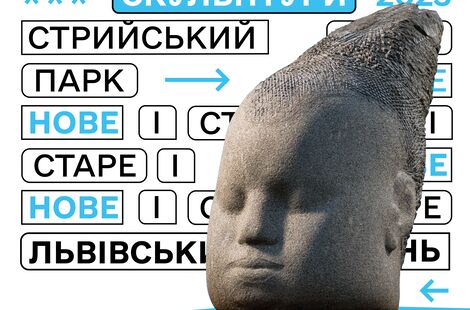
In the foreground is a sculpture by Volodymyr Semkiv from the exhibition "Lviv Sculpture Week" Photo: Ya Gallery Lviv, Taras Hipp
Still, although you don't listen to much music, what do you like?
- I really like classics, I used to listen to jazz, blues and rock. In general, I'm a boy from the village - I grew up on pop music... I went through all stages of cultural development. Okean Elzy has good songs from ours. The same goes for Pavlo Gudimov, too, his wife turned them on recently, good light songs. Skrypka has it, Boombox has it. I love Zhadan very much, Zhadan and Sobaky, and not only that. He had an incredible project - "Separation", he was very impressed. I like Bach from the classics. I can't describe it... Music either touches you or it doesn't, that's all. Very moody in general: sometimes you want rock and roll, when it rains - jazz. There was also such a thing that you came frozen, you turn on Bach, lie down on the floor...and swim.

How can you describe the process of implementing an idea?
- The sculpture is made in two stages: the first is the idea, the second is the execution. The idea appears in many different ways. I feel that it is "from above", that it was not invented by me. This is a state like an expansion of consciousness, as Arkhypenko wrote, that you are like an antenna - you can receive signals from somewhere.
For example, you see how a person "sticks" - he flew somewhere... It's something similar... It's like you're here, but you're not here. At the same time, thoughts and emotions come... Hop, there it is! - I start making sketches. I used to make them, but now I don't, because I start right away from the tree. In fact, what is in the tree is a sketch, only a large one. It's tastier.
And when it comes to the second stage, work in wood or other material, it is necessary to catch the drive, probably. The feeling when it all comes out of you, as if you are a barrel of water, where the cork has been pulled out and this energy is pouring out. There is not much of it until it runs out - you have half an hour. Then you do and do, and like a twisted rag - there is no strength. Like running a hundred meters: you go to the maximum, you do it quickly, and that's it... By the way, you have similar feelings when you draw sketches - you also have to stick to the time. You can draw a dozen and squeeze it too. I recently went to the Ya Gallery [6] for sketches, and I haven't painted for a year... In sketches, you have to constantly speed up, just like everywhere: in sculpture, and on the violin - if you don't play, then you lose, because you need to do it regularly.
Have you noticed plagiarism of your works?
- Sometimes it happened, but I don't want to talk about it... These are the problems of those people who do that. I do not envy them. If you sincerely create, then no one will catch up or surpass you - they can only imitate. It's just sad that they haven't found their groove, because everyone does what they are. The greatest achievement for an artist, in my opinion, is to be honest with yourself, to be yourself. Otherwise, it is not pleasant for anyone. Often, money is behind this and you have to survive this stage. Although many people do this at the beginning, there are especially students who are ready to do anything for a couple of hryvnias, and this is dangerous because it takes time. If, for example, you start creating tombstones, then more and more people will come for it. With these orders-copies, they attract the future, and such an environment - you have to be able to refuse

Volodymyr Semkiv and curator Pavlo Gudimov at the opening of the "From the Roots" exhibition
Photo: Ya Gallery Kyiv, Volodymyr Denysenkov
Has the "From the Roots" exhibition affected your popularity since its opening?
- A little yes, now there is a surge of new subscribers on Instagram, they watch stories, write something, then I respond with thanks.
Do your children know about the exhibition and what you do? Do they try their hand at sculpture?
- The elder, who is 5 years old, wanted to go with me, but he is still a little too small. They themselves sculpt something with me. I take Demyan with me to the workshop, and since he was 3 years old, he has been turning something with a screwdriver, soldering wax, he knows everything. Like every child - copies what dad does. The youngest is 2 years old, he is also very interested in sculpting. I give them clay or buy dough, which is then plasticine, because the plasticine is a little hardened.
Would you like to teach?
- Now I don't feel such a need. I used to teach at a private school. I am not interested in telling how to build a skull or anatomy, but it would be nice to have philosophical conversations, but you need to have a lot of experience, to live life.
In your opinion, are you satisfied with your realization of the sculptor?
- At this stage, yes, I am happy. I do what I want. If there are problems, I take them on myself. The longer you live, the more you understand that time is the most valuable thing. When you take an order that you don't really like, but it pays well, you realize that you are exchanging your time... You don't want to do that.

Photo: Ya Gallery Kyiv, exhibition From the Roots, Volodymyr Denysenkov
What's your favorite material you've ever worked with?
- The best materials for me are those that give the opportunity to convey "hand", corporeality. Metals include bronze, cast iron and aluminum. They allow the gesture to be preserved, and that's exactly what I found in the tree. I love where you can see the fingers - you can see that it lives. Only there is not a handprint, but a saw, but still a person did it. I don't like unconventional materials like plastic. It is synthetic, as if it is an imitation of something, and it is clearly artificial.
Now, after linden, I tried to work with oak, with apple, ash - hard species of wood. It also has its own charm. They make it possible to feel the hardness of the material. Linden is soft, and these can also be rubbed with sandpaper, burned and it becomes like a stone. It also depends on what meanings you want to put there.
How did you develop a passion for work? In my opinion, the idea cannot be taken just like that, it is somewhere that the totality of what is seen stands out unconsciously...
- This is definitely a visual experience. The more you have seen, the more you know - the deeper it is placed in the subconscious. Sometimes, it's ridiculous, I've had such cases: you're gluing and gluing and thinking what a cool thing you've come up with, and then you remember that Rodin[8] had something similar. I saw this once, it rubbed off and then you got out of it at work. The greater the visual experience, the wider the range of possibilities.
Do you have favorite artists?
- I like a lot of people. As the academy grows, tastes change accordingly. In the first years I liked Rodin - such art is alive. Then, Burdel and Meshtrovych are more modern. From modern ones - Entoni Gormli and Mitorai, the way they work in space. Gormli is not about sculpture at all, his figures simply stand in the sea, on the roofs of houses or on the roads. Mitorai was in Pompei at an exhibition, there was a broken bronze angel in the ruins. You don't understand where is the antiquity and where is the modern interpretation. Also Markus Liuperts, recently discovered it for himself.
Do you notice how woodwork has changed since the beginning of the year, compared to the last? And what was the chronology of the sculptures?
- Of those at the "From the Roots" exhibition, the last ones were "Keys to Paradise" and "Home". And burned almost at the same time. You have to look in the notebook, I write everything there, and when an idea comes, I make sketches there. It's hard to say, because everyone was walking closely, one after the other. Or there are works that he started and did not finish. For example, "Root", the idea of 2019 in general. She was born for some time, and then this tree with a root was found, and it took a long time to grow because it was big.
How did you create "root to the sky"?
- In 2020, I just took the tree away, it was left to dry for a while. I rarely approached him. It was still necessary to wash that root from the ground, let it dry, remove the bark and bring it to the workshop. Worked a little, then returned again in a few months, and quit again. And also, I made it near Lviv, there is a large workshop there. I did not have the opportunity to travel often, I did a little in one month, and in the next too. And I was one of the last to finish before the exhibition - I was making a stand.

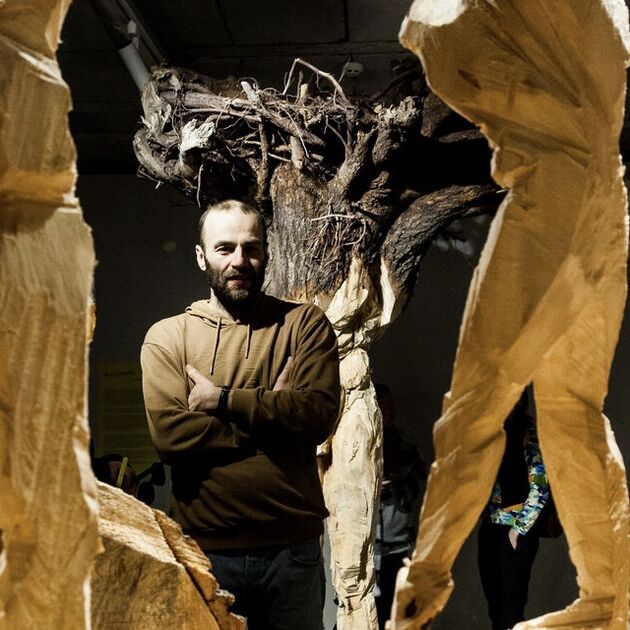
In the portrait is Volodymyr Semkiv, behind Roots in the Sky. Metastases. Opening of the exhibition From the Roots Photo: Ya Gallery Kyiv, Volodymyr Denysenkov
How do you name a work?
- My position is that the title and the work should have a gap between them - space for conjecture. For example, "Joy", where a laughing head is charred. You look and a set of metaphors appear. There is a tension between form and name. Everyone, of course, will interpret a little in their own way, but when this tension is present, it affects. So is "Root. Metastases to the sky", and above is the ceiling, but everyone can fantasize why such a name, "where are our roots?", many opinions. Where are we striving? Where are we reaching?
I try to make the sculptures universal. Now, under the influence of the war, they are repaid in one way. But I want, for example, in 10 years, when it ends, for this work to be interesting to people, and for them to put their own meaning into it.

Volodymyr Semkiv, Roots in the Sky. Metastases, 2020-2023 Photo: Ya Gallery Kyiv, exhibition From the Roots, Volodymyr Denysenkov
Were the works related to today?
- No, it just comes out. I didn't do it specifically for the war. She is around, and dictates the circumstances. You have to be honest with yourself - whether you want it or not, it will come off you if it hurts, of course. This is also a very interesting experience from the war - I treated traditional sculpture as universal art. This cannot be relevant, because a sculpture is made for a long time, it is expensive, and to make your work you have to spend a conditional six months. This is not a performance, not a drawing. You won't get caught up in the hot topic. But during the war, I had a shift in consciousness in the sense that irrelevant is unnecessary, especially in the first months. Who needs what you're doing if you have a rocket flying into the workshop tomorrow? Is it important? Then my hands fell down, and I started to draw, because it was already hurting. But even now I hold the opinion that sculpture should be universal. She absorbed the war that exists now. If you are honest, then this time will seep into that work and it will only add quality to it.
Moreover, the war spoiled several sculptures from the "Fragments" series for me. There are broken human bodies, which have now become reality, although at first they were metaphors. And this work, at least for the next 5 years under the veil. It is already banal, because it turns out that it imitates the current reality. Life is scarier than these things you try to create.

Volodymyr Semkiv, work from the Fragments series Photo given by artist
Do you have any favorite public or private sculpture projects?
- Of the public ones, I consider the monument to the Heroes of the Heavenly Hundred in Frankivsk to be important. The idea was that it should be a living memorial, as opposed to all these idols. Silhouettes on the background of the mirror are punched out of metal, as well as publications from social networks of that time. There is also an inscription: "to those who gave their lives for dignity, with which you can look yourself in the eye." There is a popular place, near the city council. And people can compare themselves against the background of those silhouettes: people gave their lives, but what do you do every day? What is your contribution? This is how they wrote in the Khanenko museum on a poster on the entire wall: "What did you do during the war?". It's different, but the point is the same.
And from private, I have "Walker", such a figure made of bronze. Rodin, Giacometti, and Assyria are there - many similar things from the history of art. It is important to me, because I still consider her close - it's like my metaphor for me [smiles]

Do you have one from the exhibition "From the Roots"?
- I like almost all of them. I would not highlight there. There are some that I like a little less, but this is 20 percent. I am not ashamed of any of them.
How do you think you have changed during the war year?
- As an artist? It just goes. For now, this is my front. I have to put these experiences into something and this is how it turns out. I can't do it any other way, that's why this is art.
Do you have a childhood memory that influenced your work?
- An interesting question. I've been sculpting since childhood, I've been sculpting all the time.
I think it's good that everything turned out the way it is, because you can regret it, fate abandoned me. I modeled early, then there was a break - it was adolescence, when parties were in my head, and then in adulthood, when I worked as a lawyer, I returned to it again. Maybe someone would punish themselves for losing so many years of life, but I don't regret anything. I believe that everything turned out for the best. Legal education, as well as any higher education, gives a breadth of views. At that time, I traveled a lot, I was in many places around the world.
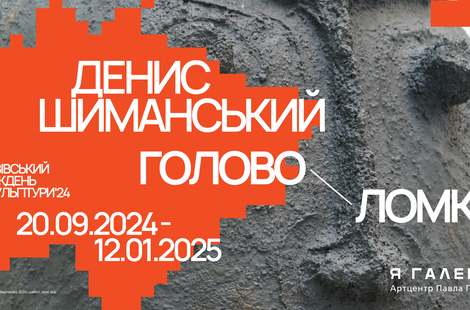
How do you and Denys Shymanskyi respond to each other's work?
- We have such a tradition that if they don't ask, we don't criticize. But we ask: if I finish work, but I'm not sure about something, then I ask Denis what he thinks. Here Rodin also said that if you have any doubts, you should ask your colleagues, if they confirm it for you, then you should think about it, and if not, then relax. If there is a problem, all professionals will notice it. I had almost no doubts about the wooden sculpture - it is a product of time and I was sure that it should be like that. Unless, maybe there are some nuances, how to burn the wood itself. As I said, it's like an antenna - it came and it should be like that.
Is the opinion of the audience important to you?
- In fact, it is very important. Criticism is important if it is constructive. I expect it and need it, actually. This is partly why the artist's exhibition is being held. Of course, this is all subjective: someone sees one thing, and someone another. An art critic came to the opening and told the work "Enlightenment" that it was an antique boxer. And this is her layering, she perceives it as such. Maybe I myself once saw him, a formal image stuck in my head, and the thought there is about something else entirely.

Volodymyr Semkiv, Insight, 2022-2023 Photo: Ya Gallery Kyiv, exhibition From Roots, Volodymyr Denysenkov
…
- And also, there was a question: why a tree? I really like to do a la prima, that is, from the beginning.
Sculpture in the material is done in two ways: or you simply copy in stone or wood what you have already molded, not counting cast materials, for example, stone or wood.
Or the second option – a la prima, when you cut from the beginning, by eye, by feel. There is a big chance of error here, and the whole thing is in skill and detail, also in the fact that you are not afraid to make a mistake. You understand - cut off the excess, and that's it - it's gone. This is a big thrill for me. It only lives like this for me, because I have to do it in one breath. It turned out - very well, it didn't work out - well, that's all, for firewood. This is precisely the biggest association with sketches, when you make them and catch the essence of the idea and put it on paper - super. Didn't catch it - waste paper.
[Further is a dialogue about sketches and courage, and the idea of what training in an art academy will give]:
-...two skills: the first is courage, the second is freedom. This is what you can learn at the Academy of Arts, I think. Courage of a gesture - when you are not afraid to mess up, which is actually very difficult. Everyone is afraid to mess up. Freedom is when you can do what you think is necessary. There is neither an external center nor an internal one - you set the framework for yourself. Here are two things that I think any art academy should teach first.
Which of the teachers of the academy do you remember the most?
- I was influenced by Yurii Dvornik, even though he led me in drawing. I would say so - he believed in me.
He was unrealized as a sculptor. He had many draft projects that he could not or was not given the opportunity to implement. He knew how to criticize in such a way that he wanted to work; with this evil inspired: "What did you do? Let's do it normally, you can." And it was he who taught us everything, said: "That's what you molded a figure, it's already a sculpture. And how the jacket will turn out, buttons - no one can escape. The whole point is in the sketch, in the gesture. What you put into this gesture will be read as such. Here you are making a 5-meter monument, and someone perceives it from half a kilometer away - it is small from a distance, but everything you wanted to say can be read. No one cares about details, whether they are there or not."
In fact, I can do that with wood, there are details that cannot be made with a chainsaw. And it is not needed in this series.
But not only wood, maybe the next works will be made of cast iron. As life will show.
[1] Pavlo Gudimov is the founder and curator of art centers Ya Gallery in Kyiv and Lviv. Before the "From the Roots" exhibition, they had two joint projects:"New Lviv Sculpture"and "Lviv Sculpture Week" in the fall of 2022.
[2] After a bachelor's degree in legal education, Volodymyr Semkiv entered the Lviv National Academy of Arts in the Department of Sculpture in 2007.
[3] in 2015, Volodymyr Semkiv together with Yulia Semkiv took first place in the memorial sign project competition. The bas-relief is installed on the facade of the city council in Ivano-Frankivsk.
Also in Frankivsk, Volodymyr won first place in the competition for the construction of a monument to Stepan Pushyk in 2019.
[4] Three-stele memorial in Burshtyn: heroes of the Maidan, fighters who died in the Russian-Ukrainian war and volunteers. The creation took place with the participation of sculptor Volodymyr Semkiv and architect Yulia Semkiv.
[5] A series of sculptures for the Ukrainian Catholic University. Since 2017, the process of erecting 6 memorials around the territory of the educational institution began. Among them are "To all the martyrs of the UGCC" and "I gave praise."
[6] Evening drawings from nature in the Lviv art center Ya Gallery, announcements of which are published on social networks.
[7] Denys Shymanskyi is a sculptor and a close friend of Volodymyr. He also cooperates with the Ya Gallery art center, in particular the exhibition "New Lviv Sculpture".
[8] Auguste Rodin is a French sculptor, one of the founders of impressionism in this field of art.
[9] The exhibition "Muses are not silent" at the Ukrainian House in Denmark, curated by Pavlo Gudimov. It will last until May 21, 2023. It was first exhibited in Lviv in the summer of 2022.