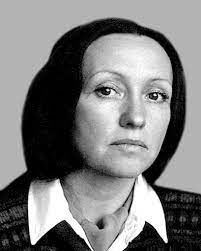
Olga Bezpalkiv was born in 1946 in a family of musicians.
Olga grew up in a creative family. Father Volodymyr taught students to play folk instruments at the Lviv Music School. He died quite quickly, he was 62 years old. Mother taught theoretical disciplines: music literature and solfeggio at music school No. 2 on Kopernyka Street. In her youth, she dreamed of entering the Myrhorod art school. Probably, that is why her daughter was attracted to artistic creation from childhood.
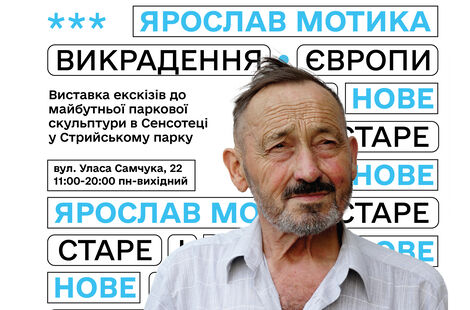
Olga enjoyed attending the art group in the Palace of Pioneers. Later, she transferred to an art school, where her teachers were the sculptor Dmytro Krvavych, the painter Roman Turin, and the ceramist Yaroslav Zakharchyshyn. During the summer vacation after the seventh grade, Olga attended additional courses for entrants to art institutions, where she met Yaroslav Motyka, who was also preparing to enter the institute. Although the commission did not assure Olga that because of her short stature it is better to enter the textile department, she easily passed the entrance exams to the Lviv School of Applied Arts and became a student of the ceramics department. The desire to sculpt won.
The first teacher in the subject was Andrii Sobolev (originally from Latvia). His wife Iryna Veniaminivna taught painting. When Olga studied in the fourth year, classes in drawing and composition were led by Taras Dragan, who had returned from exile at the time. Olga was fascinated by his methodology and had significant success in her studies.
She graduated from school in 1965. Her diploma work is a ceramic panel in the exterior of a kindergarten on Pasichnaya Street in Lviv.
When Olga came to enroll at the Lviv Institute of Applied and Decorative Arts, she felt that she knew a little more than others, some applicants turned to her for help and advice. Among those who entered the academy together with Olga were Roman Bezpalkiv, Taras Levkiv, Frans Chernyak and Vasyl Drachuk.
She passed the entrance exams with flying colours, scored the most points of all, but could only enter the evening department. Why? Despite the fact that she was educated at a school, she lacked work experience. Therefore, she got a job at a perfume factory as a package design artist, but that was not enough. That's why she didn't see her name in the list of students. All the boys who entered had referrals from the Lviv Ceramic and Sculpture Factory (LKSF). Here, Olzhina's mother decided to support her daughter and decided to go to Kyiv to the Ministry of Culture. The problem was solved, and in addition to her daughter, two more entrants were admitted to the artistic ceramics department. The teachers were Ivan Tomchuk, Emmanuel Mysko, Dmytro Krvavych, Roman Selskyi, and the supervisor of the thesis was Vasyl Hudak, who had just graduated from the institute. Krvavych knew how to explain the tasks very figuratively, but briefly and clearly, and to identify shortcomings in student works.
It turned out to be difficult to combine work and study. Olga was the only girl at ceramics. There she met her future husband. Already in the first year, she understood that her sympathy for Roman Bezpalkiv was mutual. It was impossible not to like him: slender, handsome, distinguished by erudition and a subtle mind, he was funny and romantic. In the third year, after the sudden death of Romanov's father, they got married and lived in a one-room apartment with his mother for 12 years.
In 1971, Olga defended her diploma thesis together with Roman: at the suggestion of Boris Voznytskyi, a large stove was made from terracotta relief tiles in one of the halls of the Olesky castle. Looking at historical examples, Olga developed stylized ornamental and figurative compositions. Many friends came to Olesk to defend their diploma: poets, writers and actors, among them Bohdan Stelmakh, Roman Kudlyk, Roman Lubkivskyi, Roman Ivanychuk and others. They read humorous pamphlets written on the occasion of the "prominent" event.
Roman Bezpalkiv, while working at LKSF, befriended Roman Petruk, who at that time was trying his hand at glass. It was then that he offered Olga his desk in the creative ceramic workshop of the factory. Mystkina was delighted with her new place of work and the creative environment of the factory. In the workshop, she became friends with famous ceramists - Maryana Savka, Nelly Fedchun, Milada Kravchenko and others. Roman Petruk became a special friend and mentor. His creative style greatly influenced her. However, as a creative person, Olga later searched for her own author's style. The first work at the factory in 1971 was the terracotta cup "Hey pour full spells", which Olga exhibited at the exhibition, but due to the complicated shape, it was not taken into circulation
In 1977, Olga was invited to Latvia in Dzintara (Riga) for a ceramic symposium, where she met the architect and famous ceramist Peteris Martinson. The artist played a significant role in the development of artistic ceramics in the USSR in general and in Lviv in particular, where he visited creatively. At a symposium in the House of Creativity in Dzintara, Olga performed three relief plates - "Wind", "Heat", "Silence", which were selected by the jury for the exhibition-competition in Faenza, Italy, and received an Honorary Diploma.
In 1996 Olga's personal exhibition opened in the Museum of Ideas in Lviv (10 years later, another personal exhibition of hers was exhibited there). In the same year, he and Roman Bezpalkiv took part in another group exhibition at the Kyiv House of Artists.
Since their student years, Olga and Roman spent a lot of time together, kayaking along the rivers of Ukraine with friends. The Bezpalkis have nurtured this tradition for more than 40 years. In different years, the Ostafychuk, Kosovy, Motyk families, the families of Romanov's cousin Mykhailo Bezpalkiv, Olzhy's brother Oles Dzindra, historian and archaeologist from Ternopil Ihor Hereta, bandurist and writer Mykola Lytvyn from Kyiv and other artists joined the company. Olga always brought back watercolor landscapes from her travels.
In 1980, the long-awaited child was born - daughter Khrystyna. And in 1984, the Bezpalkis got an apartment. During the creative period, Olga fulfilled monumental orders. Her panel decorates the reading room of the Lviv City Children's Library, the preventive medicine center in the village of Rudno, the building of the Lvivkhimsilmash plant on the street. Horodotskyi, the Crystal Palace sanatorium in Truskavets, the lobby of the club in the village Palikorovy Zolochiv district, lobby of another Lviv children's library; fountain for the winter garden of the children's polyclinic on Borshchagivka in Kyiv. Such orders took a lot of time, but they paid well. The savings book of the spouses had almost 5,000 rubles, which at that time could be used to buy a car. However, after the collapse of the Soviet Union in the 1990s, Russia inherited all the savings. There were almost no means of subsistence then. In the early 1990s, she actively worked on creative projects, delving more and more into the development of complex, but contemporary ceramic works, paying attention to experiments in sculpture. Olga always set difficult creative and technical tasks for herself. Due to the increase in the cost of gas, ceramics workshops at the LKSF ceased to exist in the early 1990s. Artists continued their activities independently, in their own workshops. Ceramicists bought electric furnaces at their own expense in order to fire their works.
In 1996, Olga got a job at the Lviv Forestry University at the Department of Landscape Architecture, where she taught drawing, painting, sculpture, composition and history of architecture. She worked there until 2019. In 2009, her husband Roman died after a stroke at the age of 71.
Constantly works creatively, participates in exhibitions and ceramic symposia.
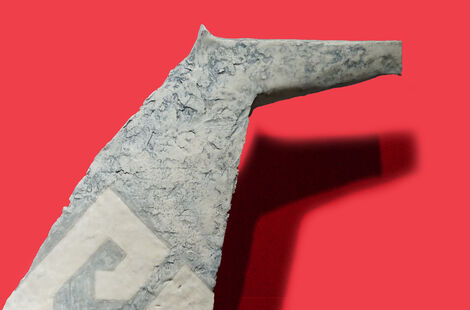
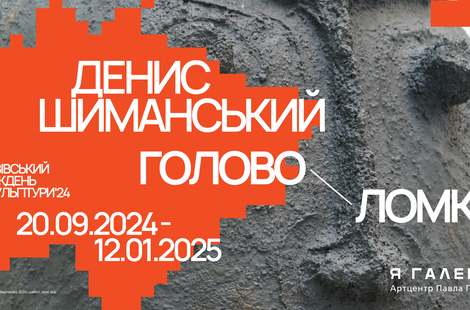
The exhibition at the "Ya Gallery" art center in Lviv is the first retrospective of the artist's work.